
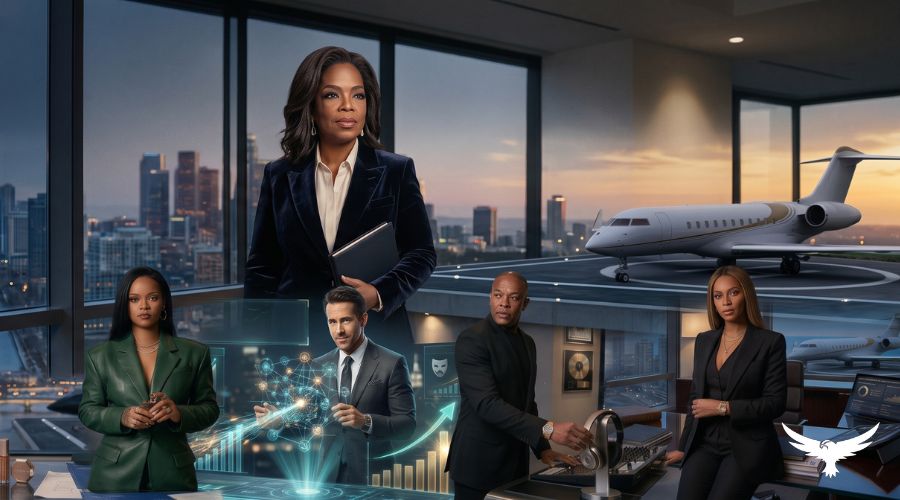

What happens when Hollywood fame becomes more than a paycheck? For a growing number of celebrities, the answer is surprisingly simple: build something you actually own.
Acting, music, and endorsements can generate enormous incomes, but businesses can create something different: equity, intellectual property, recurring revenue, and long-term value. That shift has helped turn entertainment personalities into serious entrepreneurs across beauty, fashion, food, media, technology, and investments.
The trend is not just celebrity hype. Forbes identified 22 celebrity billionaires in 2026, collectively worth $48.1 billion, up from 18 worth $39 billion in 2025. Its list includes entertainers such as Oprah Winfrey, Taylor Swift, Rihanna, Kim Kardashian, and Beyoncé.
The interesting part? Many of these fortunes were built beyond the traditional entertainment paycheck.
Why Are Celebrities Moving Into Business?
Hollywood careers can be unpredictable. A hit movie can make someone a household name, but careers change, audiences move on, and even successful performers eventually step away from the spotlight.
Business ownership offers another route.
Instead of simply getting paid to promote a product, celebrities can become founders, investors, or owners. Their fame then works like a built-in marketing engine, helping a new company gain attention much faster than an unknown startup might.
The Los Angeles Times has noted that today’s stars are increasingly moving into production companies, brands, partnerships, podcasts, and other businesses outside their original entertainment careers.
Fame Is the Starting Point, Not the Finish Line
The smartest celebrity entrepreneurs understand one important difference: attention is not the same as ownership.
A famous person can promote a company and receive a fee. A founder can own part of the company and benefit if its value increases.
That distinction has changed how some of Hollywood’s biggest names approach wealth.
Bonus Point: Celebrity entrepreneurship is increasingly about turning an audience into a long-term business asset rather than simply collecting endorsement checks.
1. Kim Kardashian: From Reality TV to Skims
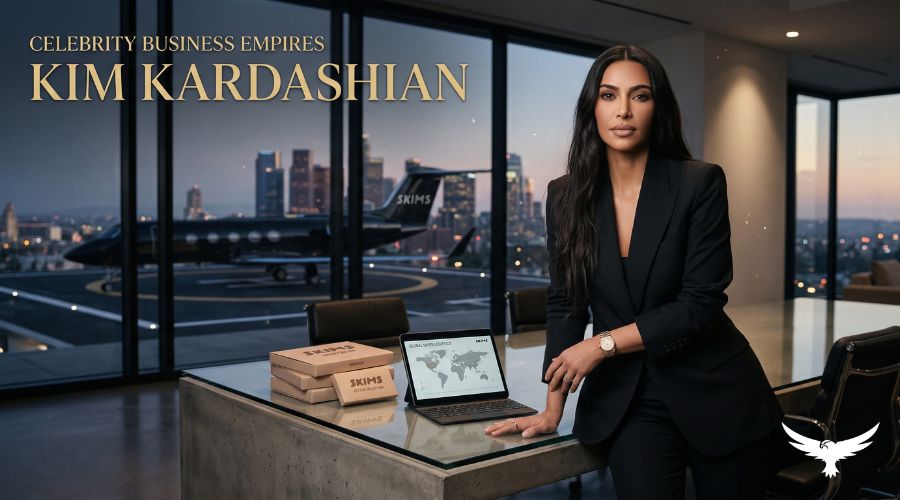
Kim Kardashian is one of the clearest examples of fame being converted into business ownership.
Her biggest business success is Skims, the shapewear and clothing company she co-founded. Forbes reported in 2026 that Skims was valued at $5 billion following a 2025 funding round, with Kardashian’s fortune largely tied to her stake in the company.
What makes the Skims story particularly interesting is its evolution. The company began as an online direct-to-consumer brand and has expanded into physical retail, with Forbes reporting plans for further store growth.
Kardashian’s fame certainly helped attract customers, but the business needed product development, distribution, and investment to become a major company.
| Celebrity | Major Business | Business Sector |
|---|---|---|
| Kim Kardashian | Skims | Fashion & shapewear |
| Rihanna | Fenty Beauty | Beauty |
| Oprah Winfrey | Harpo & media ventures | Media |
| Issa Rae | Hoorae & other ventures | Media & entertainment |
| Reese Witherspoon | Hello Sunshine. | Production & media |
2. Rihanna: Building a Beauty Powerhouse
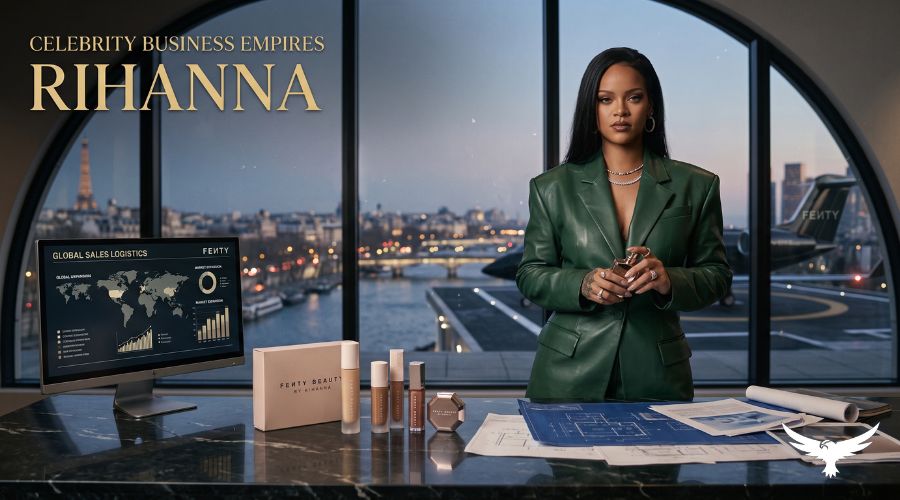
Rihanna did not stop at music.
Her Fenty Beauty brand helped change expectations around inclusivity in cosmetics, while Savage X Fenty expanded her business presence into lingerie. Forbes has credited Rihanna’s stakes in these companies as major drivers of her billionaire status.
This is where Rihanna’s business strategy becomes especially interesting. Instead of launching a random product simply because she was famous, she entered industries where her personal brand and understanding of consumers could provide an advantage.
The result was a business portfolio connected to beauty, fashion, and lifestyle.
Her story shows why celebrity businesses can work when there is a genuine connection between the person, the product, and the audience.
3. Oprah Winfrey: The Original Media Entrepreneur
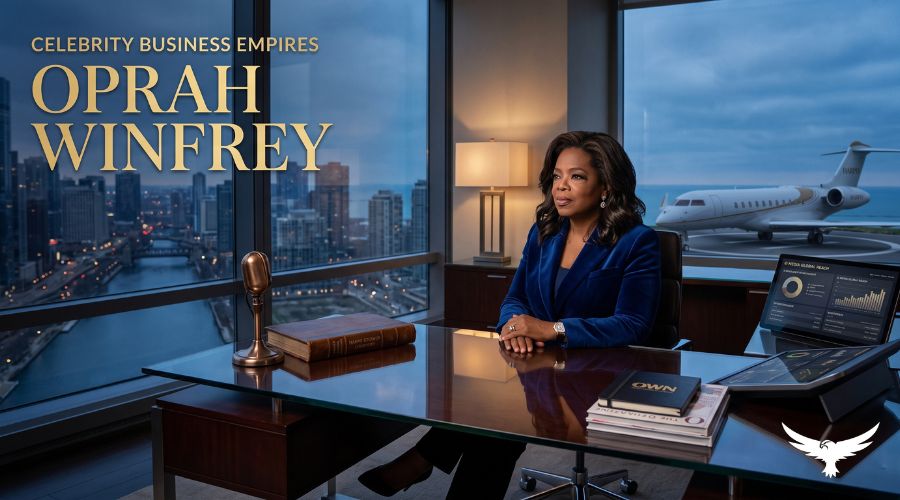
Before celebrity entrepreneurship became a social-media trend, Oprah Winfrey was already building an empire.
Her career began with television, but she turned that platform into a much broader business operation through Harpo Productions, film projects, OWN, and investments. Forbes estimates her 2026 fortune at $3.2 billion, with media success and investments playing major roles.
Oprah’s strategy was never simply about attaching her name to products. She built media infrastructure around her influence.
That difference is important. A celebrity endorsement can disappear when a campaign ends. A production company, media library, or investment portfolio can continue generating value for years.
4. Reese Witherspoon: Turning Stories Into a Business
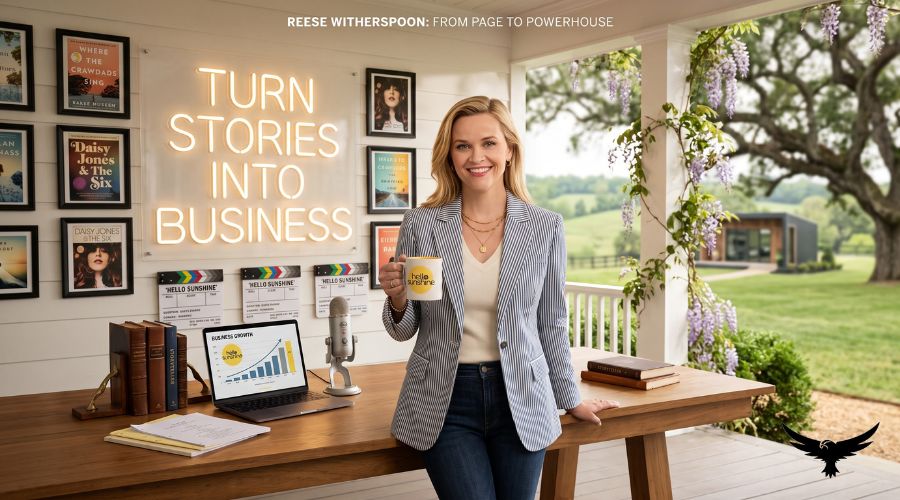
Reese Witherspoon recognized a problem in Hollywood: there were not enough compelling stories centered on women.
She responded by creating Hello Sunshine, a production company focused heavily on female-driven storytelling. Forbes reports that Witherspoon sold a majority stake in the company to Candle Media in 2021 in a deal that valued Hello Sunshine at approximately $900 million, while she retained an estimated stake.
That is a powerful example of turning an industry frustration into an entrepreneurial opportunity.
Witherspoon was not simply acting in projects. She was helping decide which stories got made.
5. Ryan Reynolds: Marketing as a Business Weapon
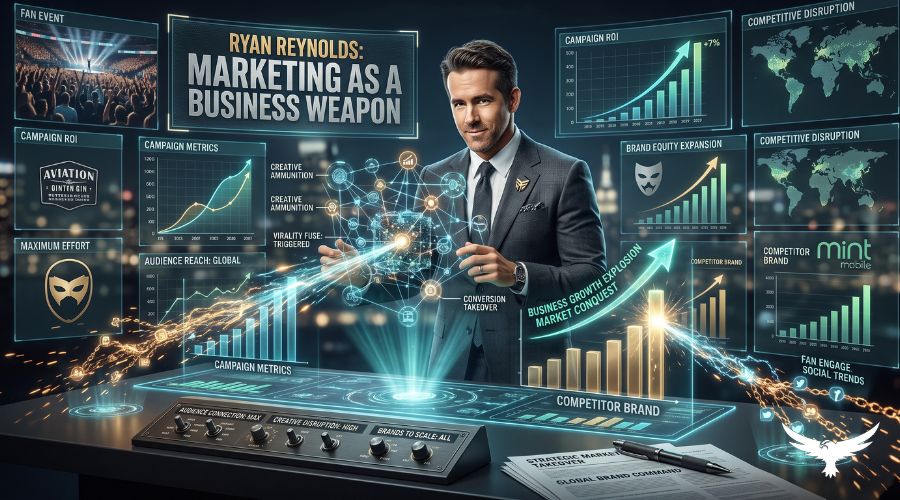
Ryan Reynolds has built a reputation that extends far beyond his acting career.
His business interests have included Aviation American Gin, Mint Mobile, marketing company Maximum Effort, and sports investments. His approach is particularly interesting because he often uses his comedic personality as part of the marketing itself.
That strategy helped make his ventures feel less like conventional advertisements and more like entertainment.
Reynolds’ Mint Mobile investment became especially notable after T-Mobile agreed to acquire the company for approximately $1.35 billion.
This is the new celebrity-business formula in action: own a stake, understand the customer, and use your fame to reduce the cost of getting attention.
6. George Clooney: From Actor to Spirits Entrepreneur
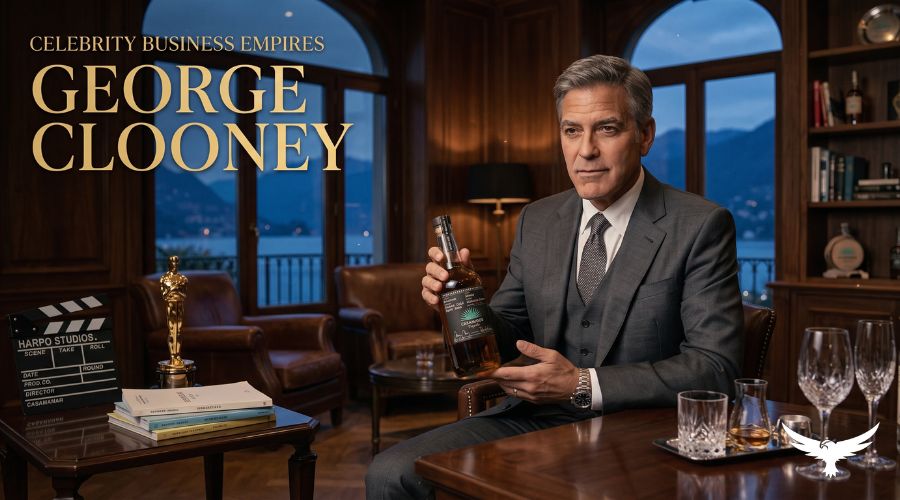
George Clooney found another route outside Hollywood through Casamigos, the tequila brand he co-founded with Rande Gerber and Mike Meldman.
The brand became a major commercial success before being acquired by Diageo in a deal reported at around $1 billion in total consideration.
Clooney’s involvement illustrates how celebrity entrepreneurs can use lifestyle credibility to make a product feel authentic. He was not simply putting his face on a bottle; he was part of the brand’s origin story.
That helped Casamigos develop an identity that existed beyond Clooney’s film career.
7. Issa Rae: Building an Entertainment Ecosystem
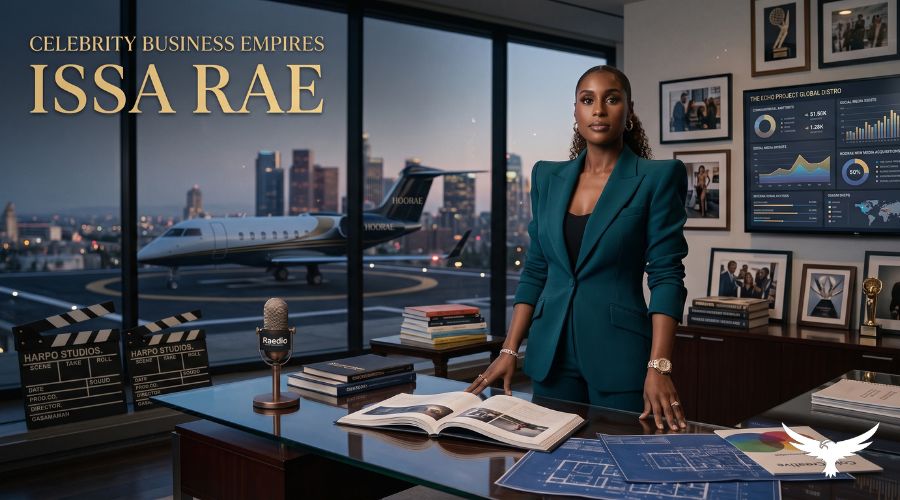
Issa Rae offers a different model.
Rather than focusing on one consumer product, she has created a network of businesses around entertainment and culture. Forbes reports that her ventures include Hoorae, Raedio, Color Creative, Sienna Naturals, and Viarae, among other projects.
This is closer to building an ecosystem than launching a single celebrity brand.
Her production work created opportunities for other ventures, while her creative influence helped each business connect back to her audience.
| Celebrity | Business Strategy | Why It Stands Out |
|---|---|---|
| Kim Kardashian | Consumer brand | Turned personal brand into scalable retail |
| Rihanna | Beauty & fashion | Combined cultural influence with product demand |
| Reese Witherspoon | Production | Built ownership around storytelling |
| Ryan Reynolds | Investment + marketing | Uses entertainment skills to sell businesses |
| Issa Rae | Business ecosystem | Connects media, talent and consumer ventures |
8. Dr. Dre: When Music Creates Technology Wealth
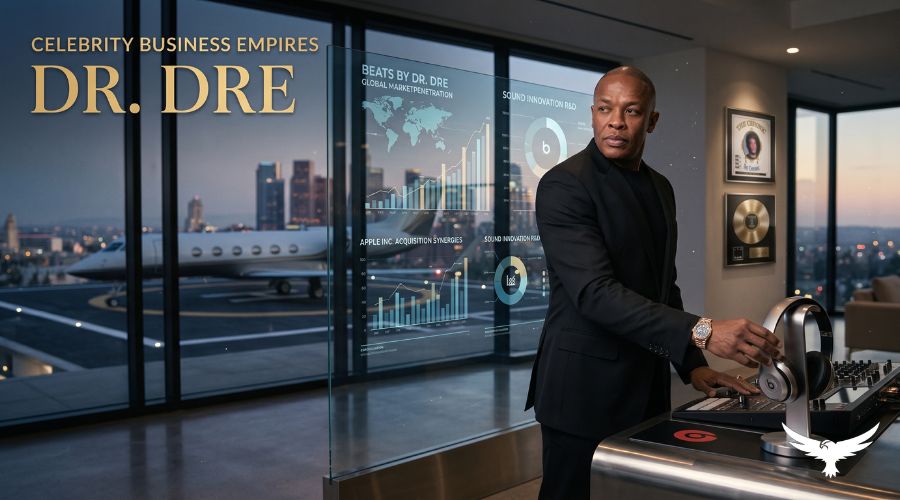
Dr. Dre demonstrates how entertainment expertise can lead directly into technology and consumer electronics.
He co-founded Beats Electronics, which became one of the most successful celebrity-connected technology companies. Apple acquired Beats for around $3 billion in cash and stock in 2014, according to Forbes.
Dre also founded Aftermath Entertainment, demonstrating that his business interests were never limited to one industry.
His career is a reminder that musicians can monetize something more valuable than recordings: taste, cultural credibility, and intellectual property.
9. Taylor Swift: Owning the Value Behind the Music
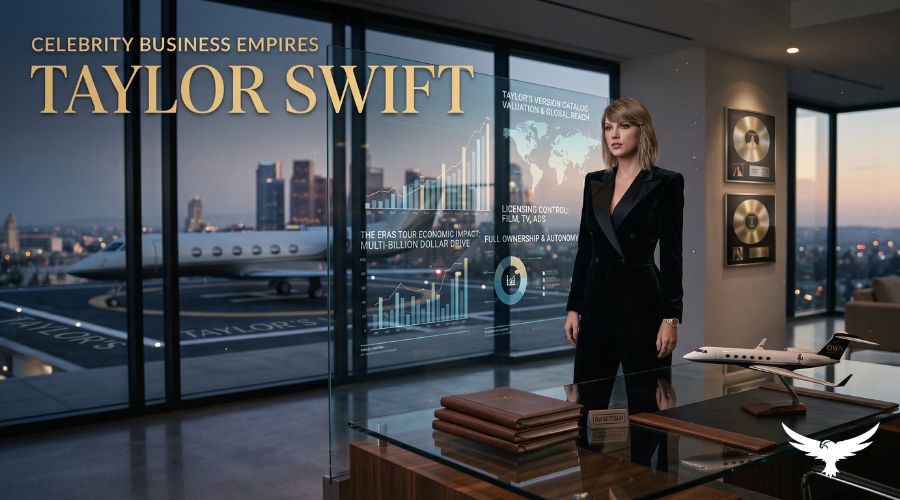
Taylor Swift’s business empire is slightly different because much of her wealth remains connected to the entertainment she creates.
According to Forbes, Swift’s estimated $2 billion fortune in 2026 includes earnings from touring and royalties, a valuable music catalog, and real estate.
Her strategy shows that building an empire does not always mean launching a beauty company or clothing line.
Sometimes the most powerful business decision is controlling your own creative assets.
Swift’s approach to music ownership, touring, and merchandising demonstrates how an artist can turn creative output into a broader commercial ecosystem.
Bonus Point: The most valuable “business” a celebrity owns may not have a storefront. It could be a music catalog, production library, intellectual property, or equity stake.
10. Beyoncé: Turning Cultural Influence Into Ownership
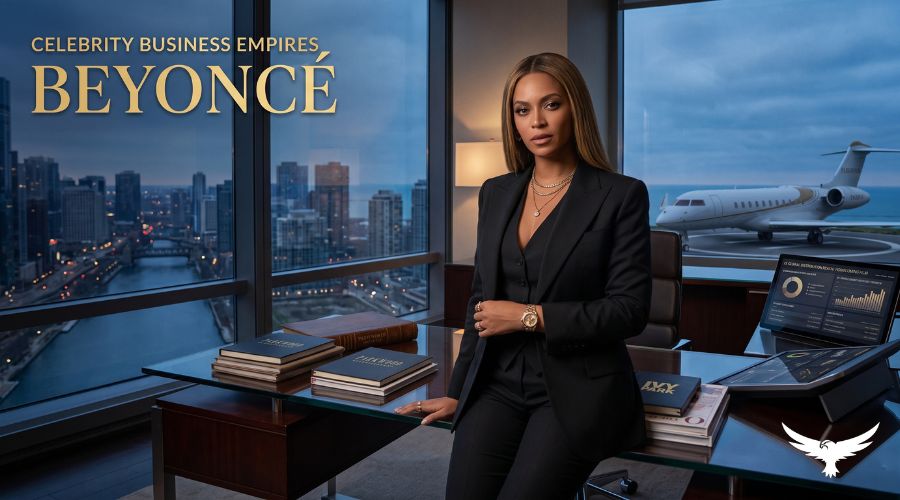
Beyoncé has also moved well beyond music.
Her business interests have included fashion, entertainment, and consumer ventures, helping make her one of the newest celebrity billionaires identified by Forbes in 2026.
Her career demonstrates the power of diversification. Music creates attention, while fashion, brand partnerships, and other commercial opportunities can convert that attention into additional revenue streams.
This is particularly important for global stars because their audiences are not limited to one country or one platform.
How Celebrity Business Empires Actually Work
A successful celebrity business usually combines several advantages that an ordinary startup has to build from scratch.
- Audience creates initial attention.
- Trust can make consumers curious about the product.
- Capital provides room to scale.
- Industry partnerships bring expertise and distribution.
- Ownership creates the possibility of long-term wealth.
But fame alone does not guarantee success.
A celebrity can launch a product that fails just as easily as any other entrepreneur. The strongest businesses usually have a real product, experienced management, and a reason for existing beyond the celebrity’s name.
The Celebrity Business Formula
- Build an audience
- Identify a genuine market opportunity
- Create or invest in a strong product
- Retain meaningful ownership
- Use fame as a distribution advantage
- Reinvest and diversify
Why Ownership Matters More Than Endorsements
There is a major financial difference between saying, “Buy this product,” and saying, “I own part of this company.”
An endorsement generally produces income for a campaign or contract period. Equity can potentially increase in value as the business grows.
That is why celebrity entrepreneurs increasingly seek ownership positions rather than traditional endorsement arrangements.
Fortune recently highlighted how celebrity-backed consumer companies have demonstrated the commercial power of celebrity influence, pointing to examples including Rihanna’s Fenty Beauty, Ryan Reynolds’ Mint Mobile investment, and George Clooney’s Casamigos exit.
The lesson is simple: fame can attract customers, but ownership is what can create lasting wealth.
What Does the Future Look Like?
The next wave of celebrity entrepreneurship may go even further into technology, artificial intelligence, and venture investing.
Recent reporting shows celebrities increasingly founding or investing in AI-focused businesses, including projects connected to filmmaking, technology, and venture capital.
That makes sense. Hollywood stars understand storytelling, branding, and audience behavior, three ingredients that can be extremely valuable when launching consumer or media technology.
Bonus Point: The next celebrity empire may not look like a perfume, clothing line, or restaurant. It could be a technology company, AI platform, investment fund, or intellectual-property business.
Celebrity Businesses vs. Traditional Hollywood Income
| Income Source | Main Benefit | Long-Term Potential |
|---|---|---|
| Acting salary | Immediate income | Limited to projects |
| Endorsement | High short-term earnings | Usually contract-based |
| Production company | Ownership & creative control | High |
| Consumer brand | Equity + recurring sales | Potentially very high |
| Investments | Portfolio diversification | Depends on performance |
| Intellectual property | Royalties & licensing | Can last for decades |
Conclusion
Hollywood is changing, and celebrity wealth is changing with it.
The biggest stars are no longer relying solely on movie salaries, music royalties, or endorsement checks. Kim Kardashian, Rihanna, Oprah Winfrey, Reese Witherspoon, Ryan Reynolds, George Clooney, Issa Rae, Dr. Dre, Taylor Swift, and Beyoncé demonstrate how fame can become the foundation for something much larger.
The most successful celebrity entrepreneurs understand that attention is only the beginning. The real opportunity comes from turning that attention into ownership, intellectual property, companies, and investments.
And that may be the most interesting part of modern celebrity wealth. The red carpet creates visibility, but the boardroom can create longevity.
Frequently Asked Questions
1. Which Hollywood celebrity has the biggest business empire?
Several celebrities have built enormous business fortunes. In Forbes’ 2026 ranking, Steven Spielberg had an estimated $7.1 billion, George Lucas $5.2 billion, and Oprah Winfrey $3.2 billion.
2. How do celebrities make money outside acting?
Celebrities can earn through companies, investments, production businesses, consumer brands, licensing, real estate, intellectual property, and equity stakes. The most successful often combine several of these income streams.
3. Is Kim Kardashian’s wealth mainly from Hollywood?
No. Forbes says the vast majority of Kardashian’s wealth comes from her stake in Skims, rather than her original reality TV career. Skims was valued at $5 billion following a 2025 funding round.
4. Which celebrity built a business from a production company?
Reese Witherspoon is a strong example. She founded Hello Sunshine to focus on female-driven stories and later sold a majority stake in the company in a deal valuing it at approximately $900 million.
5. Why are celebrity-owned businesses becoming more popular?
Celebrities already have something new businesses usually spend years trying to build: audience attention. When that attention is combined with a strong product, professional management, and meaningful ownership, it can provide a powerful foundation for business growth.