
Roger Federer Just Became a Billionaire: Here’s the Investment Move Behind It
Roger Federer just joined one of the most exclusive clubs in the world, and tennis had almost nothing to do with it. Forbes confirmed this week that the 44-year-old retired champion is officially a billionaire. He’s only the second tennis player ever to hit that number.
The bigger story isn’t the milestone itself. It’s the seven-year-old investment decision that quietly made it happen, long before anyone was paying attention.
For a full breakdown of how his fortune adds up, including prize money, endorsements, and everything else, see our in-depth Roger Federer Net Worth guide.
The Announcement: What Forbes Confirmed
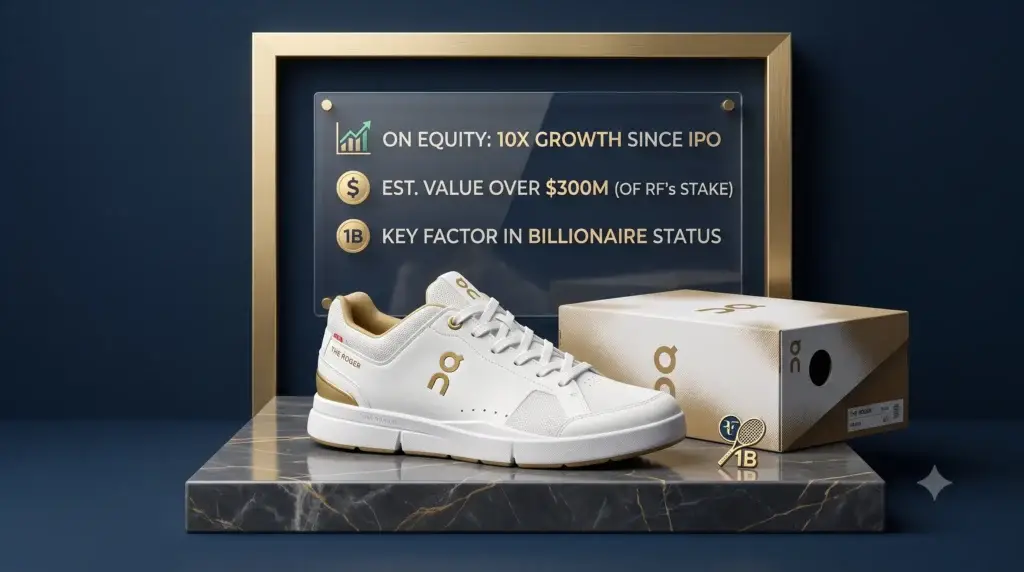
Forbes’ latest wealth tracking places Federer’s net worth at $1.1 billion. That figure is driven far less by his 20 Grand Slam titles than by a business decision he made back in 2019.
Bonus Tip: Get involved, don’t just invest. Federer helped design products and open new markets for On, rather than staying a silent shareholder; active involvement tends to compound value faster than passive investing.
What’s notable is the timing. Federer has been retired since September 2022. Unlike most athletes, whose wealth growth slows sharply once they stop competing, this has accelerated. That detail alone has caught the attention of sports business analysts watching how the next generation of athletes structures their post-career finances.
Where He Ranks Among Athlete Billionaires
The confirmation puts Federer in rare company. Ion Tiriac, a former Romanian tennis pro, was the only other player to reach billionaire status, and he did it through banking and real estate nearly two decades ago, not tennis.
It also arrives at a moment when the “athlete billionaire” club is getting more crowded than ever. Forbes’ 2026 celebrity billionaires list added several new names this year, including Beyoncé Knowles-Carter and filmmaker James Cameron, alongside Federer. Crossing into ten-figure territory, once almost unheard of outside tech and finance, is becoming a more realistic ceiling for top-tier entertainers and one of the richest athletes who diversify early.
Quick Facts
| Net Worth (2026) | $1.1 billion |
| Age | 44 |
| Career Prize Money | ~$130 million |
| Lifetime Endorsement Earnings | ~$1 billion |
| On Running Stake | ~3%, worth $375M+ |
| Billionaire Rank | Only the 2nd tennis player ever, after Ion Tiriac |
| Retired | September 2022 |
The Investment Behind the Milestone
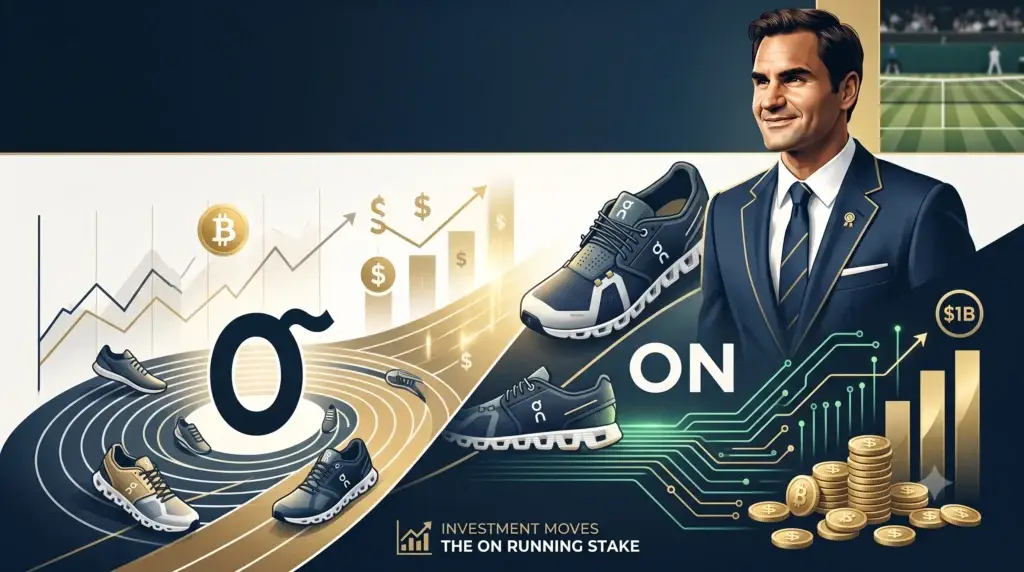
Back in 2019, Federer took an equity stake, roughly 3%, in On, a small Swiss running shoe startup. At the time, most people outside Europe had never heard of it.
How the Deal Actually Started
Federer didn’t just write a check. He got hands-on, helping design a tennis shoe and lifestyle apparel line for a brand that had never touched those markets before.
Two years later, in 2021, On went public on the New York Stock Exchange at a valuation near $15 billion. Federer’s stake, still intact, jumped in value overnight.
By 2026, with On’s market cap holding between $13.6 billion and $15 billion, that single stake is worth more than $375 million. That’s over double what Federer earned in prize money across his entire 24-year playing career.
For comparison, his career prize money sits at roughly $130 million. One investment decision, made almost as a favor to a company he liked, ended up outperforming two decades of tournament wins combined.
A Detailed Timeline of the Deal
| Year | Milestone | On’s Valuation | Federer’s Stake Value | Significance |
|---|---|---|---|---|
| 2019 | Takes a ~3% equity stake in On | Private, early-stage | Undisclosed | Gets hands-on, helps design tennis and lifestyle lines |
| 2020 | Continuous product involvement | Private, growing | Undisclosed | Deepens brand ties ahead of IPO |
| 2021 | On goes public on the NYSE | ~$15 billion | ~$450 million | Stake value jumps overnight |
| 2022 | Retires from professional tennis | ~$12 billion | ~$360 million | Wealth keeps growing despite retirement |
| 2023 | On leadership, credit Federer publicly | ~$13 billion | ~$390 million | Confirms his role as “the accelerator” |
| 2026 | Forbes confirms billionaire status | ~$13.6–15 billion | $375 million+ | Stake becomes his single largest asset |
How the Business World Is Reacting
One’s own leadership has been vocal about Federer’s role. Marc Maurer, one of the company’s executives, described him as “the accelerator” who helped the brand break into categories it couldn’t have entered on its own.
That’s a very different framing than the typical athlete endorsement, where a star simply lends their name to a product they had no hand in shaping.
Sports finance analysts are increasingly citing Federer’s case as a shift in how top athletes should think about wealth. The traditional model, prize money plus a shelf of sponsorship logos, has a hard ceiling. Equity doesn’t. As one analyst put it, athletes are moving “from being paid spokespeople to being actual owners.”
Bonus Tip: Equity outlasts endorsements. A sponsorship check stops when the contract ends; an ownership stake keeps growing with the company, which is exactly why On outperformed two decades of prize money.
How Federer Compares to Other Athlete Billionaires
Federer isn’t the only recent example, but his path to a billion looks different from most others on the list.
| Athlete | Net Worth (2026) | Main Wealth Driver | Year Reached Billionaire |
|---|---|---|---|
| Roger Federer | $1.1 billion | Equity stake in On Running | 2026 |
| Cristiano Ronaldo | $1.3 billion+ | Endorsements, social media, business ventures | 2026 |
| LeBron James | $1.2 billion+ | Media company, Nike, real estate | 2025 |
| Tiger Woods | $1.7 billion+ | Endorsements, golf course design business | 2024 |
| Ion Tiriac | $2.3 billion | Banking, real estate, auto dealerships | 2007 |
| Dr. Dre | $1.0 billion+ | Beats Electronics, Apple acquisition | 2026 |
What sets Federer apart is how concentrated his jump is. A single early-stage bet, rather than a broad portfolio of ventures, drove the majority of his wealth growth.
What This Means for Athlete Investing
Federer’s story is landing at a moment when athletes across sports are already negotiating equity stakes instead of, or alongside, flat endorsement fees.
It’s a meaningful shift. A sponsorship check stops on the day a contract ends. Ownership keeps compounding as long as the company keeps growing.
The Risk Nobody Talks About
This model isn’t guaranteed to work for everyone. Federer’s outcome depended on picking a company that actually succeeded, and one that went public at a strong valuation; something no athlete can predict with certainty.
For every On, there are startups backed by athletes that never reach an IPO, or that lose value after going public. Federer’s case is being studied less as a formula to copy exactly, and more as proof that the upside of ownership can dwarf even a historically lucrative playing career.
Bonus Tip: Timing and luck still matter. Federer’s stake paid off because On succeeded and went public at a strong valuation, a reminder that even smart bets carry real risk, not guaranteed returns.
Agents and sports business advisors are reportedly using the Federer-On relationship as a pitch to current athletes: negotiate for equity, get genuinely involved in product decisions, and treat the partnership more like a business role than a marketing appearance.
Conclusion
Federer’s billionaire status is technically a tennis headline, but the real story is about business timing. A shoe company that few people had heard of in 2019 turned into the single biggest driver of his fortune, bigger than two decades of Grand Slam prize money combined.
As more athletes watch this outcome unfold, expect equity stakes, not just endorsement deals, to become the next big negotiating point in sports.
FAQs
1. What is Roger Federer net worth in 2026?
Forbes confirmed Roger Federer’s net worth at $1.1 billion in 2026, making him only the second tennis player ever to reach billionaire status.
2. What made Roger Federer a billionaire?
Mainly, his roughly 3% equity stake in On Running, acquired in 2019 before the company’s 2021 IPO, is now worth over $375 million.
3. How much prize money did Roger Federer earn in his career?
Federer earned around $130 million in career prize money, the third-highest total in tennis history behind Djokovic and Nadal.
4. Is Roger Federer richer than Cristiano Ronaldo?
No, Ronaldo’s estimated net worth is slightly higher at $1.3 billion-plus, driven by endorsements, social media, and business ventures.
5. Who was the first tennis player to become a billionaire?
Ion Tiriac, a former Romanian player, reached billionaire status in 2007 through banking, real estate, and auto dealerships.
6. Does Roger Federer still earn money after retiring?
Yes, through his On Running stake, long-term endorsement deals with Rolex and Uniqlo, and ventures like Team8 and the Laver Cup.
7. What is On Running’s current valuation?
Running’s market capitalization sits between roughly $13.6 billion and $15 billion as of 2026, per recent trading data.
You Can Also Look For:
Don King Net Worth
Ryan Garcia Net Worth
Byron Allen Net Worth
Gabriel Iglesias Net Worth
Rick Rubin Net Worth
David Dobrik Net Worth